


 English
Forehead Lines vs Frown Lines: How Botox Treats Different Types of Wrinkles
|
Key Takeaways • Forehead lines are horizontal creases caused by the frontalis muscle raising your eyebrows. Frown lines are the vertical “11” lines between the brows caused by muscles that pull the brows together. • Because these muscles do opposite jobs, Botox is used differently in each area. The forehead usually needs a lighter, more careful approach. • Frown line Botox is one of the most predictable aesthetic treatments. Forehead Botox needs more planning to avoid heavy or droopy brows. • People with hooded or heavy eyelids, which are common in Asian faces, need particular care with forehead treatment. • Deep lines that remain at rest may need Botox combined with fillers, skin boosters or lasers. |
Not all forehead wrinkles are the same. The horizontal lines that appear when you raise your eyebrows and the vertical lines that form between your brows when you frown are caused by different muscles, doing opposite jobs. That is why Botox for forehead lines and frown line Botox are planned quite differently, even though they sit just a few centimetres apart.
This guide explains the difference between the two, how Botox treats each one, what results to expect and what to do if your lines are deep or etched in.
Forehead Lines vs Frown Lines: What Is the Difference?
| Feature | Forehead Lines | Frown Lines |
|---|---|---|
| Appearance | Horizontal lines across the forehead | Vertical “11” lines between the eyebrows |
| Muscle responsible | Frontalis, which lifts the eyebrows | Corrugator and procerus, which pull the brows together and down |
| Triggered by | Raising your brows, surprise, keeping eyes open wide | Frowning, concentrating, squinting |
| How they can make you look | Tired, worried or older | Angry, stressed or stern |
| Botox approach | Lighter, spread-out doses to keep brows lifted | Firmer doses to relax the frowning muscles |
| Main risk if overdone | Heavy, flat or droopy brows | Rarely, a temporary droopy eyelid |
What Causes Forehead Lines?
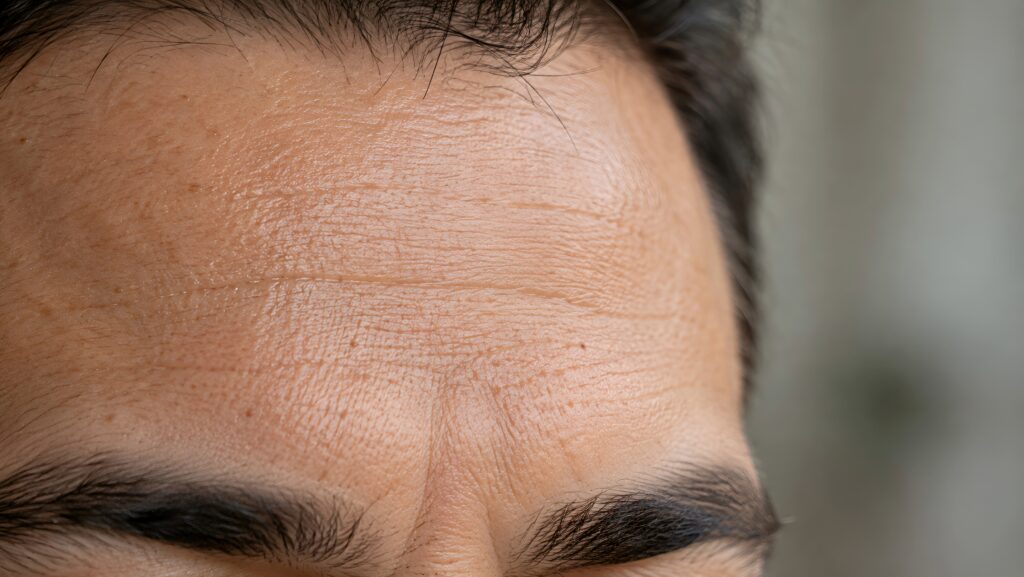
The frontalis is the only muscle that lifts your eyebrows. Every time you raise your brows, it contracts and folds the forehead skin into horizontal lines. Over years, combined with collagen loss and sun exposure, those folds begin to stay even when your face is relaxed.
Some people use their forehead muscle much more than others. A common reason is heavy or hooded eyelids. Without realising it, people with heavy lids often lift their brows all day to keep their eyes open and their vision clear. This habit deepens forehead lines, and it changes how they should be treated.
What Causes Frown Lines?
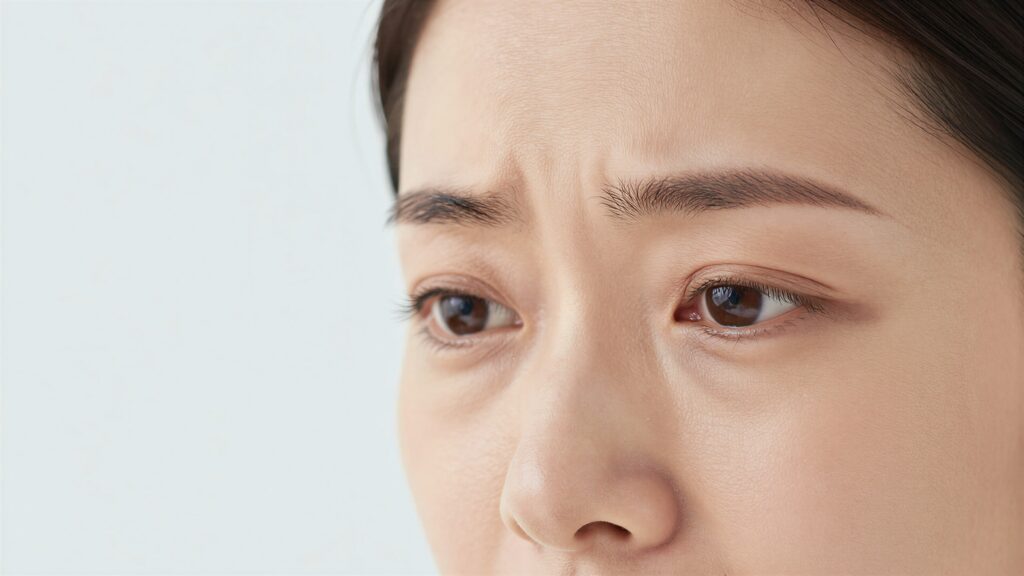
Frown lines form between the eyebrows when the corrugator and procerus muscles contract. These muscles pull the brows inward and downward when you frown, concentrate, squint into the sun or stare at a screen.
In Malaysian culture, frown lines are often seen as making a person look fierce or unapproachable, even when they are perfectly relaxed. Many patients say colleagues or family members assume they are upset when they are not.
How Botox Treats Frown Lines
Frown line Botox is one of the most established and predictable cosmetic treatments. Small amounts are injected into the corrugator and procerus muscles, usually at three to five points between and just above the brows.
Because these muscles only pull the brows down and together, relaxing them has a useful side effect. The brows can sit slightly higher and more open, which makes the face look calmer and more rested.
Most patients see softening within 3 to 5 days, with the full effect at about 2 weeks. Results usually last 3 to 4 months, sometimes longer with regular treatment.
| OUR PATIENT’S EXPERIENCE
My frown lines make me look angry in meetings, to the point that colleagues ask if I am upset. I had the frown lines treated without the forehead. The difference showed after about five days. Faint lines remain at rest, but I can no longer frown hard. I go back every four to five months. Puan Zainab, 48 |
How Botox Treats Forehead Lines
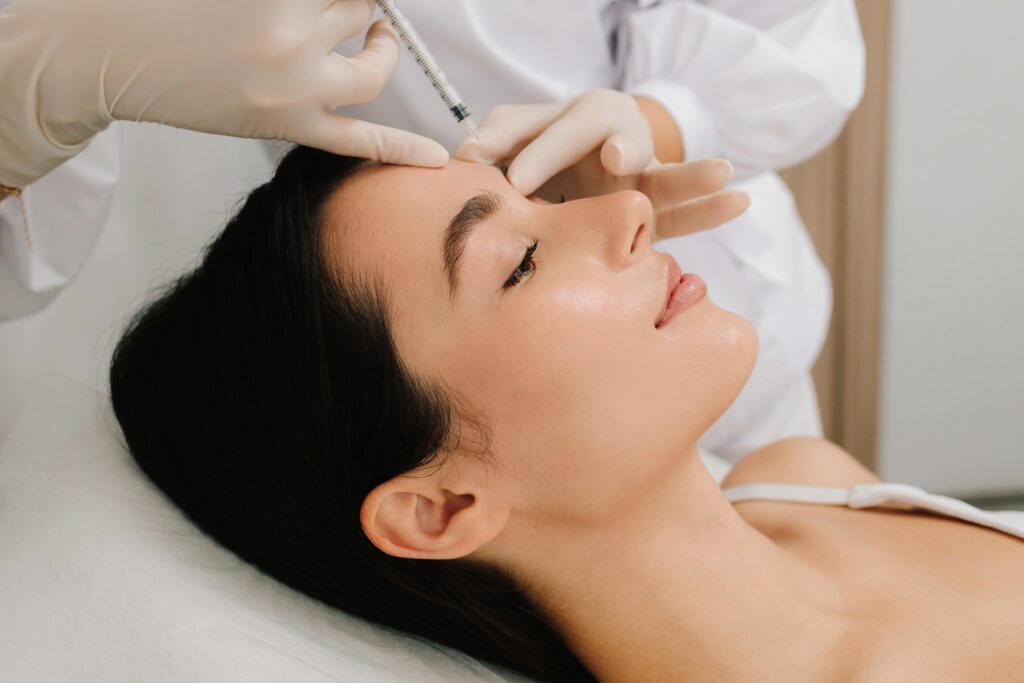
Treatment for forehead lines needs more care. The frontalis is the only muscle holding the eyebrows up, so relaxing it too much can cause:
- Heavy or droopy eyebrows
- A tired, hooded look to the eyes
- A flat, shiny, expressionless forehead
- Arched or “surprised” outer brows if only the middle is treated
To avoid this, doctors usually use smaller doses spread across the forehead, leave the lower part of the muscle more active so the brows stay up, and often treat the frown muscles at the same time to balance the forces.
Why Asian Eyelids Need Special Consideration
Many Malaysian patients have monolids or naturally heavy upper eyelids. Some also have mild drooping of the upper lid with age. In these patients, the forehead muscle may be working constantly to keep the eyes open. Relaxing it fully can make the eyelids feel heavy and the eyes look smaller.
For these patients, doctors often use lower doses on the forehead, avoid the area just above the brows, or advise treating only the frown lines.
| DOCTOR’S INSIGHT
“Before I touch the forehead, I watch how the patient opens their eyes. Many of my patients with monolids or heavy upper lids are raising their brows all day without knowing it. If I relax that muscle fully, they feel their eyelids are heavy and their eyes look smaller. For them, softening the forehead lines partly is the right outcome, not a compromise.” Dr. Shilpa Suresh, Premier Clinic KL City, Bangsar & Mont Kiara |
Should Forehead Lines and Frown Lines Be Treated Together?
Many people have both forehead and frown lines, and treating them together often gives the most balanced result. When the frown muscles are relaxed, the forehead muscle does not have to work as hard against them, so a lighter forehead dose can be used. Treating only the forehead and not the frown muscles is more likely to leave the brows feeling heavy.
| DOCTOR’S INSIGHT
“Patients who wear the tudung often care more about the frown lines than the forehead, because the inner scarf covers most of the upper forehead. For many of them, we treat the area between the brows and only the lower part of the forehead that shows. It uses less product and lowers the risk of heavy brows.” Dr. Keerthana Shukdesh, Premier Clinic TTDI, Bangsar & Puchong |
When Botox Is Not Enough: Deep and Static Lines
Botox works on lines caused by movement. If your lines are deeply etched and visible even at rest, Botox will soften them and stop them deepening, but it may not remove them completely. Options that can be combined include:
- Dermal filler: A very soft filler placed carefully in a deep frown line can lift the crease. This area has important blood vessels, so it should only be done by an experienced doctor.
- Skin boosters: Improve hydration and skin quality across the forehead.
- Fractional CO2 laser: Resurfaces the skin and stimulates collagen to soften etched lines.
- Lifting treatments: Where heavy brows are part of the problem, treatments such as Ultherapy may help lift the brow area.
If you are unsure which suits you, it is worth reading about Botox vs filler and how each works.
| DOCTOR’S INSIGHT
“Patients in their 50s who spent years outdoors without sun protection often have forehead lines that are etched into the skin. Botox stops the folding and prevents them getting deeper, but on its own it will not make that forehead smooth. I would rather say that at the first consultation than have the patient disappointed at review.” Dr. Nigel Ong, Premier Clinic Bangsar & KL City |
What to Expect During Forehead and Frown Line Botox Treatment
Consultation: Your doctor will watch your face at rest, while frowning, raising your brows and opening your eyes, and ask about any previous Botox.
Injection: Treatment takes around 10 to 15 minutes using a very fine needle.
Aftercare: Avoid rubbing the area, lying flat for a few hours and strenuous exercise for the rest of the day.
Review: A follow-up at two weeks allows small adjustments if needed.
Possible Side Effects
- Small bruises or redness at injection points
- Mild headache for a day or two
- Heavy brows, more likely with forehead treatment
- Uneven brow height, usually correctable with a small top-up
- Rarely, a temporarily droopy upper eyelid, which resolves as the product wears off
| OUR PATIENT’S EXPERIENCE
I have monolids and wanted my whole forehead treated because lines appear when I raise my eyebrows. I was given a lighter dose, leaving the area just above the brows untreated. My eyes felt slightly heavy in the mornings for the first week, which then settled. The lines softened rather than disappeared, and my brows can still lift a little. Ms Chan, 32 |
Final Thoughts: Choosing Between Forehead and Frown Line Botox
Forehead lines and frown lines may sit close together, but they need different Botox strategies. Frown lines are usually straightforward to treat. Forehead lines need more careful dosing, especially for people with hooded or heavy eyelids. For deep lines, combining Botox with other treatments gives the best chance of smoother skin.
At Premier Clinic, our doctors assess how your forehead and brow muscles work together before planning treatment, so the result looks natural and keeps your eyes looking open.
Frequently Asked Questions
Which is better, frown line Botox or forehead Botox?
It depends on which lines bother you. Frown line Botox is more predictable and also helps the brows look more open. Forehead Botox needs a more careful, lighter approach. Many people get the most balanced result by treating both together.
Why do my eyebrows feel heavy after Botox for forehead lines?
This happens when the forehead muscle, which lifts the brows, is relaxed more than needed. It is more common in people with hooded eyelids. It usually improves within a few weeks and can be prevented next time with a lighter dose.
What is the best treatment for forehead lines that stay at rest?
Botox helps stop them deepening, but etched lines often need extra treatment such as skin boosters, lasers or, in selected cases, a soft filler. A combination usually gives the best improvement.
How long does frown line treatment with Botox last?
Usually 3 to 4 months. Some patients find results last longer after several regular treatments.
Can Botox lift my eyebrows?
Relaxing the frown muscles can allow the brows to sit slightly higher, sometimes called a Botox brow lift. The effect is subtle and depends on your anatomy.
What if I have deep frown lines that remain visible even when I am not frowning?
Deep frown lines may remain visible because repeated movement and changes in skin structure have created static creases. Botox can reduce the muscle activity contributing to these lines, but it may not remove them completely. Additional skin-focused treatments may be considered after assessing the risks and suitability of each option. Filler injections between the eyebrows require particular caution because of serious vascular risks.