


 English

Lumps After Lip Fillers: What’s Normal and When Should You Worry?

|
Key Takeaways • Small bumps, firmness and uneven swelling in the first one to two weeks after lip filler are common and usually settle on their own. • A bump inside the lip after filler is often just the filler being felt through the thin inner lining of the lip, not a problem. • Lumps that persist beyond a few weeks, appear months later, or come with redness, warmth or pain need a doctor’s assessment. • Severe pain, pale or blotchy purple skin, or blistering soon after treatment can mean a blocked blood vessel. This is an emergency and needs immediate attention. • Most lumps from hyaluronic acid (HA) filler can be treated, often by dissolving the filler with an enzyme called hyaluronidase. |
You have just had lip filler, and when you run your tongue along the inside of your lip, you feel a bump. Or perhaps your lips look uneven and one area feels firmer than the rest. It is natural to worry. The good news is that most lumps after lip filler are temporary and part of normal healing.
But some lumps do need attention, and a small number of symptoms need urgent care. This guide explains what is normal, what causes lumps, the warning signs to look out for and how lumps are treated.
Are Lumps and Bumps Normal After Lip Filler?
The lips are soft, mobile and full of blood vessels, so they react quite strongly to injections. In the first days after treatment, you can expect:
- Swelling: Usually peaks between 24 and 72 hours and settles over one to two weeks. It is often uneven, so one side may look bigger at first.
- Bruising: Small bruises are common and fade within a week or so.
- Firmness: The filler and swelling can make the lips feel firmer than usual.
- Small bumps: Tiny lumps you can feel, but often not see, as the filler settles into the tissue.
- Tenderness: Mild soreness when eating, talking or touching the lips.
Normal Lip Filler Swelling vs Warning Signs
| Symptom | Usually Normal | Needs a Doctor’s Review |
|---|---|---|
| Timing | First 1 to 2 weeks | Lasts beyond 2 to 4 weeks, or appears months later |
| Bump inside the lip | Soft, painless, felt with the tongue | Growing, painful, red or hard |
| Swelling | Improves day by day | Gets worse after day 3, or returns later |
| Skin colour | Normal colour or small bruises | Pale, white, dusky, purple or net-like pattern |
| Pain | Mild tenderness | Severe or worsening pain |
| Other signs | None | Fever, pus, blisters, warmth, spreading redness |
Why Do Lumps Form After Lip Fillers?
Swelling and Uneven Settling
The most common reason for lumps in the first two weeks is simply that the filler has not yet settled evenly and the tissue is still swollen. These usually soften without any treatment.
Filler Felt Through the Inner Lip
A bump inside the lip after filler is very common. The inner lining of the lip is thin, so filler placed close to it can be felt with the tongue even when it cannot be seen from the outside. If it is soft and painless, it is usually not a concern.
Filler Placed Too Superficially or in Clumps
If filler sits too close to the surface or collects in one spot, it can form a visible lump or a slightly bluish bump. These may not settle on their own and may need treatment.
Too Much Filler or Migration
Using a large amount in one session, or repeated top-ups over time, can lead to filler spreading beyond the lip border or collecting in uneven pockets. This is a common cause of a lumpy or “ducky” look.
Delayed Inflammatory Nodules and Infection
Less commonly, a hard lump after lip filler can appear weeks or even months later. This may be an inflammatory reaction, a low-grade infection, or in rare cases a granuloma, which is the body forming a firm barrier of immune cells around the filler. These lumps are often tender, red or swollen and need medical treatment.
| DOCTOR’S INSIGHT
“I always tell patients to skip the sambal and very hot drinks for the first day or two. Chilli and heat do not cause lumps, but they make the lips swell more, and that extra swelling is when patients panic that a lump is forming. Most of the photos I receive in the first week show normal swelling that has settled by the review.” Dr. Tarina Sandara, Premier Clinic Puchong & KL City |
Lip Filler Complications: When Should You Seek Medical Help?
Seek Help Immediately If You Notice
These can be signs that filler has blocked a blood vessel, called a vascular occlusion. It is rare, but it needs urgent treatment, ideally within hours:
- Severe pain that is out of proportion to normal tenderness
- Skin that looks pale or white, or turns dusky, purple or blotchy in a net-like pattern
- Skin that feels cooler than the surrounding area
- Blisters or small pustules appearing within a few days
- Any changes in vision, which is extremely rare after lip filler but is an emergency
Contact the doctor who treated you straight away. If you cannot reach them, go to the nearest emergency department.
See Your Doctor Soon If
- A lump is still present after two to four weeks
- A lump is growing, hard or painful
- There is redness, warmth, increasing swelling or pus
- A new lump appears weeks or months after treatment
- You develop a cold sore near the treated area
| OUR PATIENT’S EXPERIENCE
On day three after my first lip filler, I felt a hard bump inside my lower lip with my tongue and worried it would stay. I was advised to leave it alone, not massage it and come back at two weeks. By the review the bump had softened a lot and I could only just feel it. No treatment was needed. Ms Aina, 25 years old |
What to Do if You Notice a Lump After Lip Filler
For normal post-treatment bumps and swelling:
- Leave it alone: Do not massage or squeeze lumps unless your doctor specifically tells you to.
- Use a cold compress: Wrap it in a clean cloth and apply for a few minutes at a time during the first day or two.
- Avoid heat and strain: Skip saunas, hot showers on the face, strenuous exercise and alcohol for 24 to 48 hours.
- Go easy on spicy and very hot food: These can make swelling feel worse in the first day or two.
- Sleep slightly propped up: This can reduce morning swelling.
- Take photos: Daily photos in the same lighting help you and your doctor see whether things are improving.
How Do Doctors Assess Persistent Lip Filler Lumps?
Not every lump after lip filler requires dissolving. Before recommending treatment, a doctor needs to determine whether the bump is caused by remaining filler, swelling, inflammation, infection or another complication.
During the assessment, your doctor may:
- Review your treatment history: Ask when the filler was injected, which product was used, how much was administered and whether you have had previous filler treatments.
- Examine the lump: Check its location, size, firmness, tenderness and any changes in skin colour or swelling.
- Assess when it appeared: A lump noticed shortly after treatment may have a different cause from one that develops several months later.
- Consider further investigation: In selected cases, ultrasound imaging may help identify the filler material, its location and surrounding tissue changes.
The findings help determine whether observation, medical treatment or filler correction is appropriate.
Persistent or unexplained lumps should be assessed by a qualified medical practitioner rather than treated at home. Severe pain, changes in skin colour or vision problems require immediate medical attention and should not be delayed for a routine consultation.
How Are Lip Filler Lumps Treated?
Treatment depends on the cause, the type of filler and how long the lump has been there.
| Cause | Common Treatment |
|---|---|
| Early swelling or uneven settling | Watch and wait, usually 2 weeks |
| Superficial or clumped HA filler | Gentle moulding by the doctor, or a small dose of hyaluronidase to dissolve it |
| Overfilling or migration | Hyaluronidase to dissolve part or all of the filler, then a fresh start if desired |
| Infection | Antibiotics, sometimes combined with dissolving the filler |
| Delayed inflammatory nodule or granuloma | Hyaluronidase for HA filler, plus anti-inflammatory treatment such as steroid injections or antibiotics |
| Non-HA or unknown filler | Assessment, sometimes imaging, and specialised correction options |
Dissolving HA Filler With Hyaluronidase
Most lip fillers are hyaluronic acid (HA) filler. HA can be broken down by hyaluronidase, an enzyme injected into the lump. Results are often visible within a day or two. Sometimes more than one session is needed. Hyaluronidase is also the main emergency treatment for a blocked blood vessel, which is why it should always be available wherever fillers are injected.
| DOCTOR’S INSIGHT
“Some of the most difficult lip lumps I see come from treatments done outside a medical setting, where the patient does not know what product was injected. If it is not HA, hyaluronidase will not dissolve it, and the correction becomes more complicated. Knowing the exact product is one of the most useful things a patient can bring to a consultation.” Dr. Kee Yong Seng, Premier Clinic TTDI, Bangsar & Puchong |
Why Choosing a Qualified Lip Filler Provider Matters in Malaysia
Lip filler is sometimes offered at beauty salons, home-based services or through social media sellers at very low prices. This carries real risks:
- Unregistered products: Fillers in Malaysia should be products registered with the Medical Device Authority. Unregistered products may be poorly made, non-HA or impossible to dissolve.
- No emergency backup: Non-medical settings rarely keep hyaluronidase or have a doctor who can manage a blocked blood vessel.
- Unknown history: Without records, it is hard for the next doctor to know what is in your lips.
Doctors performing aesthetic procedures in Malaysia should hold a Letter of Credentialing and Privileging (LCP) from the Ministry of Health. It is reasonable to ask about this, and to ask for the name of the filler used. Learning the signs of bad fillers can also help you spot problems early.
| OUR PATIENT’S EXPERIENCE
I had lip filler at a beauty salon a couple of years ago and have had a firm lump ever since. I do not know what product was used. A small test dose of hyaluronidase showed that the lump responds, and it softened partly. I had a second session a few weeks later. The lump is flatter now, though some firmness remains. Ms Lim, 32 years old |
How to Lower Your Risk of Lumps
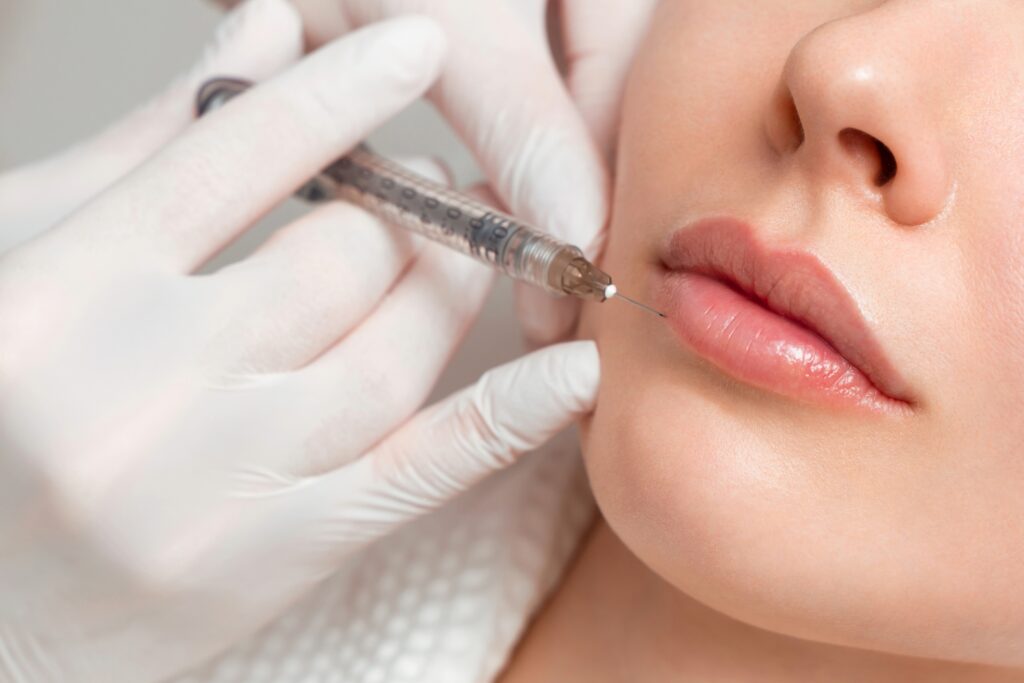
- Choose a credentialed doctor in a licensed medical clinic
- Ask which filler will be used and keep a record
- Start with a modest amount and build gradually over separate sessions
- Tell your doctor about any history of cold sores, as you may need preventive medication
- Avoid dental work, facials and vaccinations close to your treatment date if possible, and let your doctor know about upcoming procedures
- Follow aftercare advice and attend your review
| DOCTOR’S INSIGHT
“Lumps are more likely when a lot of product goes in at one sitting. Many patients bring reference photos of much fuller lips than their own anatomy can support. I would rather place a smaller amount, review at two weeks, and add more later if needed. That approach gives fewer lumps and a shape that suits the face.” Dr. Shilpa Suresh, Premier Clinic KL City, Bangsar & Mont Kiara |
Final Thoughts: When to Seek Help for Lip Filler Lumps
Most bumps after lip filler are normal and settle within a couple of weeks. A soft, painless bump inside the lip is usually nothing to worry about. Lumps that persist, grow, hurt or appear later deserve a doctor’s assessment, and signs of a blocked blood vessel need immediate attention.
If you have a lump after lip filler, whether it was done recently or years ago, the doctors at Premier Clinic can assess the cause and discuss options, including dissolving and correcting filler where appropriate.
Frequently Asked Questions
Is it normal to have a bump in the lip after filler?
Yes, in the first one to two weeks. Small bumps and uneven swelling are common while the filler settles. If a lump is still there after two to four weeks, or is painful, red or growing, see your doctor.
Why can I feel a bump inside my lip after filler but not see it?
The inner lining of the lip is thin, so filler placed near it can be felt with your tongue even when it is not visible from outside. If it is soft and painless, it is usually harmless and often becomes less noticeable over time.
My filler feels hard and lumpy weeks later. What should I do?
Book an assessment with a doctor. Persistent firmness can be caused by filler that has settled unevenly, too much product or an inflammatory reaction. Most HA filler lumps can be treated, often with hyaluronidase.
Should I massage a lump after lip filler?
Only if your doctor tells you to. Massaging without guidance can push filler into the wrong place or irritate the tissue. Many early lumps settle without any massage.
What are filler nodules?
Filler nodules are firm lumps under the skin after filler treatment. Some are simply collections of product, while others are caused by inflammation or infection and can appear months later. The right treatment depends on which type it is, so a medical assessment is important.
Will dissolving a lip filler lump remove all my lip filler?
Hyaluronidase breaks down hyaluronic acid filler, and treatment can sometimes be directed towards a particular area. However, it may also affect nearby filler, and the amount dissolved is not always fully predictable. Your doctor should explain the likely changes, potential risks and whether further treatment may be necessary.