


 English

Ultherapy vs Thread Lift: Which Facial Lifting Approach Should You Consider?
|
Key Takeaways • Ultherapy uses focused ultrasound energy to heat deep layers of the skin and stimulate collagen, giving a gradual lift and tightening over two to three months with no cuts and little downtime. • A thread lift uses dissolvable threads inserted under the skin to physically lift sagging tissue, giving a visible lift straight away, with one to two weeks of swelling and tightness. • Ultherapy suits people who want natural, gradual improvement with no social downtime. A thread lift suits people who want a more immediate lift and can accept a short recovery. • Results from both usually last around one to two years, depending on age, skin quality and the products or settings used. • Neither replaces a surgical facelift for heavy sagging. Many patients get the best result by combining treatments. |
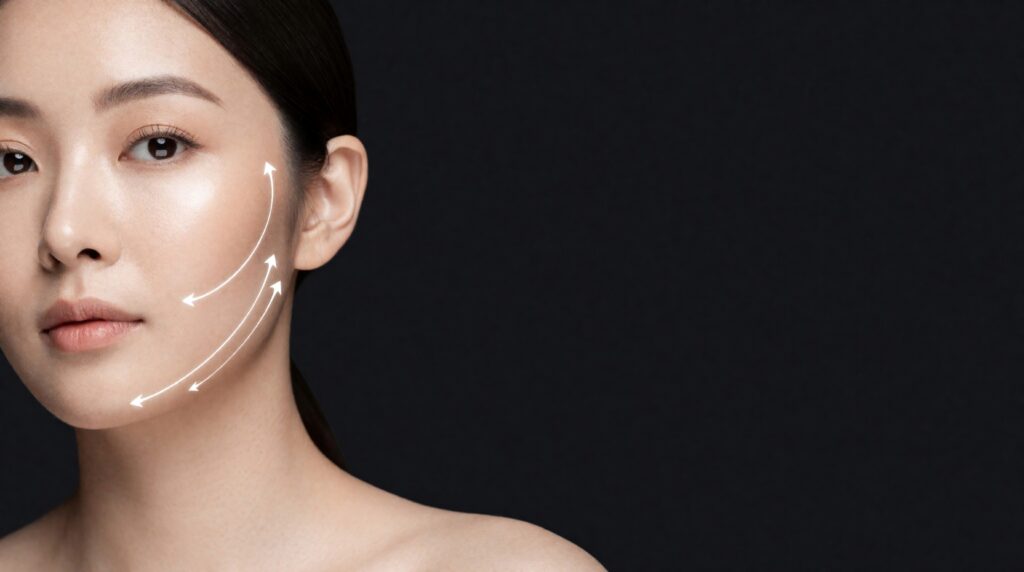
When you first notice your jawline softening, your cheeks sitting lower or the corners of your mouth turning down, it is natural to start looking at face lifting treatment options that do not involve surgery. Two of the most frequently compared are Ultherapy and a thread lift.
Both aim to lift sagging skin, but they work in completely different ways. One uses energy to rebuild collagen from within. The other uses threads to physically reposition the tissue. This guide compares Ultherapy vs thread lift in terms of how they work, results, recovery, longevity and suitability, so you can decide which approach, or which combination, fits you.
How Does Ultherapy Lift and Tighten Skin?
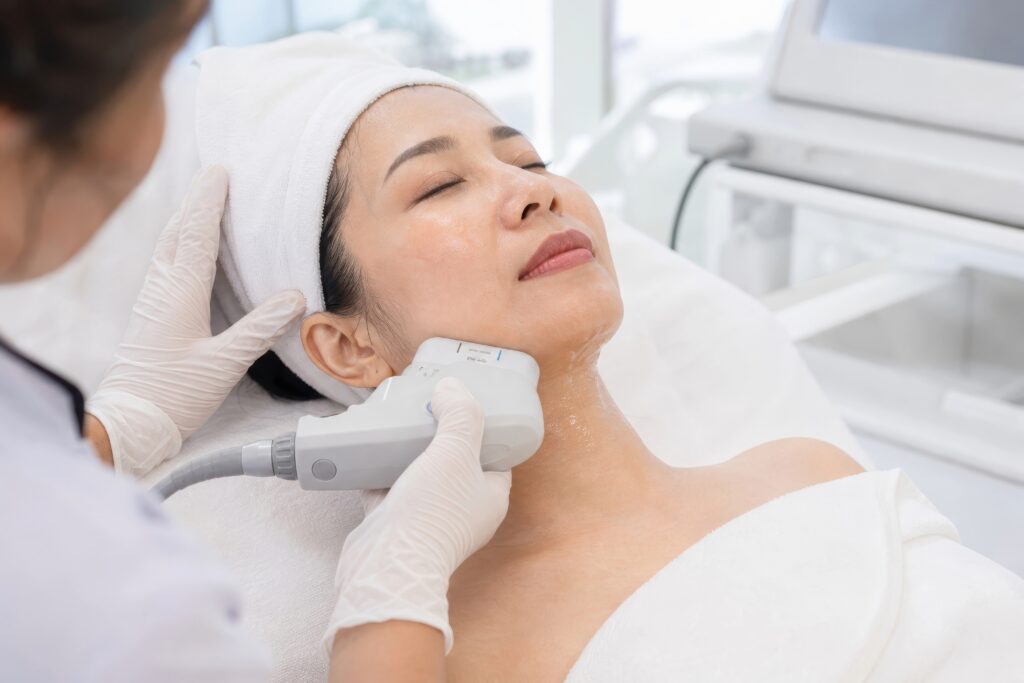
Ultherapy is a non-invasive treatment that uses micro-focused ultrasound with real-time imaging. The imaging lets the doctor see the layers beneath the skin and deliver energy precisely to the right depth.
The ultrasound creates tiny points of heat in the deeper layers of the skin, including the supportive layer that surgeons lift during a facelift. This heat triggers the body’s natural healing response, producing new collagen and tightening existing collagen over the following months.
Ultherapy has received US FDA clearance for lifting the brow, lifting loose skin under the chin and on the neck, and improving lines on the chest. It is one of the most established forms of Ultherapy skin tightening and lifting.
What it feels like: Most patients feel warmth and short bursts of discomfort, particularly over bony areas. Numbing cream and pain relief help. A full face and neck treatment usually takes 60 to 90 minutes.
How a Thread Lift Works
A thread lift, sometimes called a face threading face lift, involves inserting fine, dissolvable threads under the skin through a small needle or cannula. There are two main types:
- Lifting threads: These have small barbs or cogs that grip the tissue. When the thread is gently pulled and anchored, the sagging tissue is repositioned upwards.
- Smooth threads: These do not lift but stimulate collagen around them to improve skin firmness and texture.
Threads are commonly made from materials such as PDO (polydioxanone), PLLA or PCL, which the body gradually absorbs over months. As they dissolve, they leave behind new collagen that helps support the lifted tissue. Many clinics use PDO threads for facial lifting.
What it feels like: The procedure is done under local anaesthetic and usually takes 30 to 60 minutes. Patients typically feel pressure and tugging rather than sharp pain.
Ultherapy vs Thread Lift: Side-by-Side Comparison
| Factor | Ultherapy | Thread Lift |
|---|---|---|
| How it works | Ultrasound heat stimulates and tightens collagen | Threads physically lift tissue and stimulate collagen |
| Invasiveness | Non-invasive, no needles under the skin | Minimally invasive, threads placed with needles or cannulas |
| Results visible | Gradually, best at 2 to 3 months | Immediately, refining over weeks |
| Type of change | Natural tightening and subtle lift | More visible repositioning |
| Downtime | Little to none, mild redness or tenderness | 1 to 2 weeks of swelling, bruising and tightness |
| Common temporary effects | Tenderness, swelling, tingling | Dimpling, tightness when chewing or yawning, bruising |
| How long results last | Around 1 to 2 years | Around 1 to 2 years, depending on thread type |
| Best for | Mild to moderate laxity, prevention, jawline and neck | Moderate sagging of cheeks, jowls and brows |
| DOCTOR’S INSIGHT
“Asian faces often carry more soft tissue in the mid-face and have thicker skin, so the weight that needs supporting is greater. For patients with heavier cheeks, threads alone can relax sooner than expected. I often prefer to tighten first with Ultherapy, then place threads a few months later if more lift is needed. The collagen from the first treatment gives the threads better support to hold on to.” Dr. Kee Yong Seng, Premier Clinic TTDI, Bangsar & Puchong |
Ultherapy vs Thread Lift Results: What Can Each Treatment Achieve?
Ultherapy
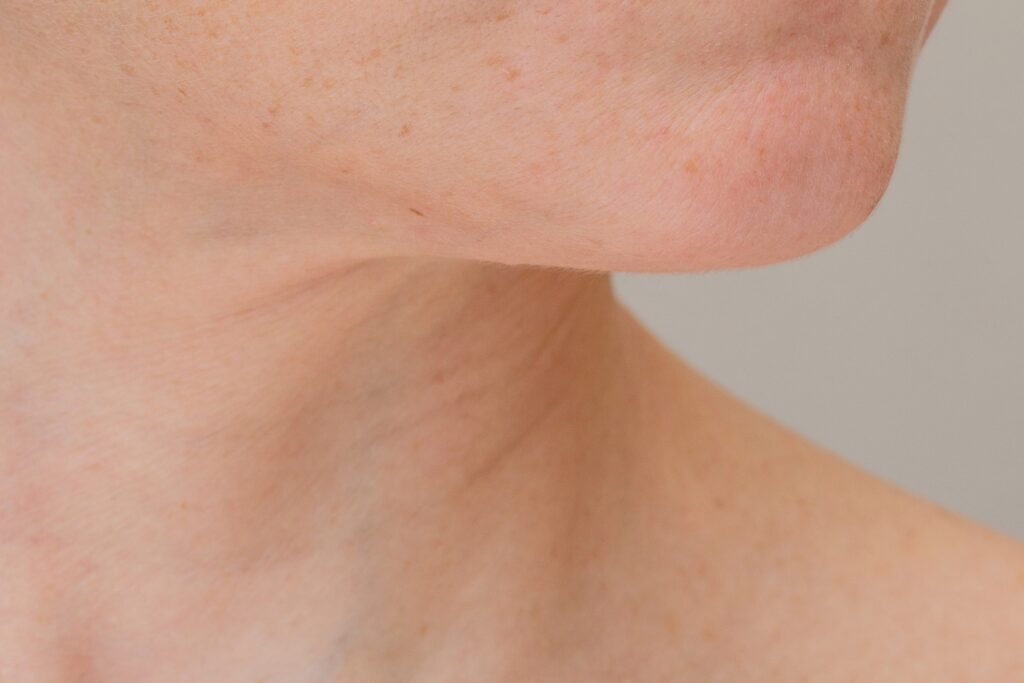
Can: Gradually tighten skin, define the jawline, lift the brows slightly, improve loose skin under the chin and on the neck, and slow further sagging.
Cannot: Give an immediate, dramatic lift, restore lost volume, or correct heavy sagging.
Thread Lift
Can: Provide a visible lift straight away, reposition cheeks and jowls, and improve skin firmness as the threads dissolve.
Cannot: Tighten crepey skin significantly on its own, restore volume, or provide a permanent result. In very thin faces, threads may be more visible or palpable.
| OUR PATIENT’S EXPERIENCE
My jawline has started to soften with early jowls, and I cannot take time off work. I had Ultherapy. It was uncomfortable along the jaw, and the area stayed tender for about a week. Little changed at first, but around the third month my side photos showed a sharper jawline compared with the before photos. Madam Pang, 60 |
Downtime and Recovery
After Ultherapy
Most people go straight back to work. You may notice mild redness, swelling or tenderness for a few days. Occasionally, there may be small bruises or temporary tingling or numbness in some areas, which settles with time.
After a Thread Lift
Swelling and bruising are common for about one to two weeks. You may notice small dimples or puckering of the skin, which usually settle as the tissue adjusts. Most doctors advise:
- Avoiding wide mouth opening, chewing very hard food and heavy facial expressions for one to two weeks
- Sleeping on your back with your head raised
- Avoiding facial massage, facials and dental procedures for a few weeks
- Avoiding saunas, hot yoga and strenuous exercise for around two weeks
Recovery in a Hot, Humid Climate
Malaysia’s heat and humidity add a few practical considerations after a thread lift. Sweating, frequent face wiping and outdoor exercise close to the small entry points can increase the risk of irritation or infection. It helps to plan recovery around a period when you can stay indoors more and keep the face clean and dry.
| DOCTOR’S INSIGHT
“Many of my patients exercise outdoors early in the morning, and in our heat that means a lot of sweating and wiping the face. After a thread lift I ask them to pause outdoor workouts for about two weeks. The minor infections I have seen at entry points usually involve sweat and repeated touching in that first week, so this simple step matters.” Dr. Deeban Ramasamy, Premier Clinic KL City, TTDI & Puchong |
Who Is Ultherapy Best For?
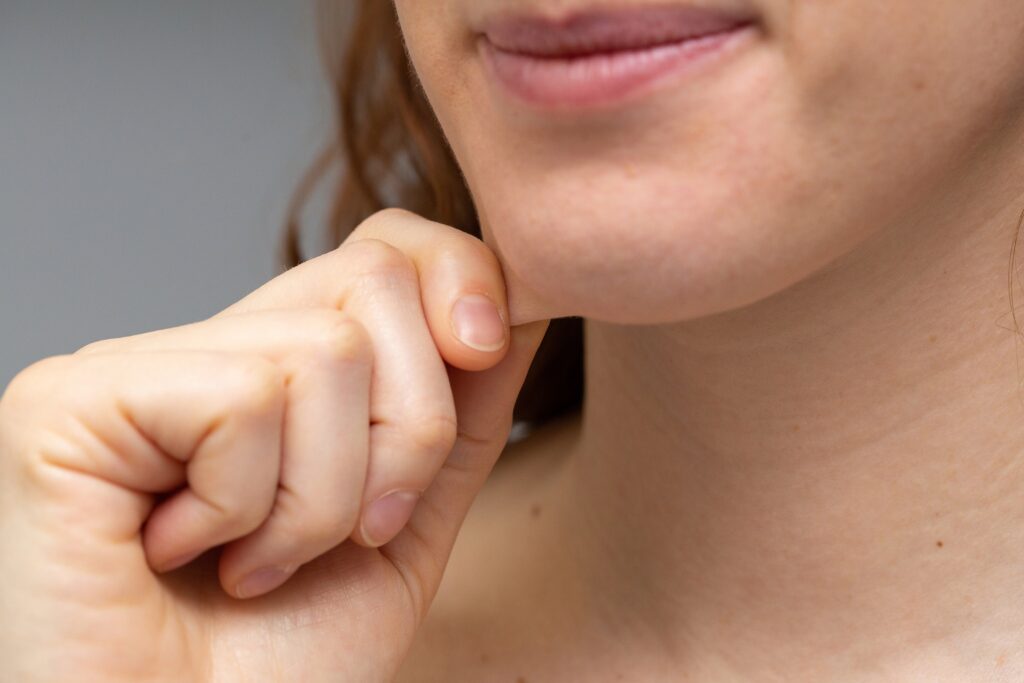
- People in their 30s to 50s with mild to moderate skin laxity
- Those who want natural, gradual results with no social downtime
- Patients who prefer a needle-free treatment
- People who want to prevent or slow sagging
- Those concerned about loose skin under the chin and on the neck
Who Is a Thread Lift Best For?
- People with moderate sagging of the cheeks, jowls or brows
- Those who want a visible lift straight away
- Patients who can accept one to two weeks of recovery
- People with enough soft tissue for the threads to grip
| OUR PATIENT’S EXPERIENCE
I wanted to look less tired before my daughter’s wedding, a couple of months away. With time limited, I had a PDO thread lift for the cheeks and jowls. The swelling lasted about a week, and a small dimple near the temple appeared and settled within ten days. Chewing felt tight for the first week. I was told the lift usually holds for around a year, after which I plan to repeat it. Madam Teo, 52 |
Can Ultherapy and Thread Lift Be Combined?
Yes, and for many patients a combination gives the most balanced result. Each treatment addresses a different part of the problem:
- Ultherapy: Tightens and improves skin quality over time
- Thread lift: Repositions sagging tissue
- Dermal filler or collagen stimulators such as Sculptra: Restore lost volume that lifting alone cannot fix
When combining treatments, doctors usually space them a few weeks to a few months apart, depending on the treatments and the patient. Your doctor will plan the order and timing.
| DOCTOR’S INSIGHT
“Patients who choose Ultherapy often expect to see a lift as they walk out, and they feel disappointed at the two-week mark. I take standardised photos before treatment and ask them to compare at three months, not before. For patients who need to see an immediate change, a thread lift or a combination is usually the more satisfying choice.” Dr. Keerthana Shukdesh, Premier Clinic TTDI, Bangsar & Puchong |
Which Is Better, Thread Lift or Ultherapy?
There is no single answer to which is better, thread lift or Ultherapy. It depends on what you need:
- If you want gradual tightening with no downtime, Ultherapy may suit you better.
- If you want an immediate lift and can accept a short recovery, a thread lift may suit you better.
- If you have both laxity and sagging, combining them often gives the best result.
- If you have significant volume loss, adding fillers may be needed.
- If you have heavy sagging and loose skin, a surgical facelift may be more appropriate.
You can read more about how long Ultherapy lasts and how skin tightening technologies compare when deciding on a long-term plan.
Final Thoughts: Choosing Between Ultherapy and Thread Lifting
Ultherapy and thread lifts are both effective non-surgical face lifting treatments, but they work in different ways and suit different needs. Ultherapy builds a natural lift gradually with almost no downtime. A thread lift gives a more immediate change with a short recovery. For many patients, a tailored combination works best.
At Premier Clinic, our doctors assess your skin quality, degree of sagging and volume before recommending Ultherapy, a thread lift or a combination, so the plan matches your face and lifestyle.
Frequently Asked Questions
Which is better, thread lift or Ultherapy?
Neither is better for everyone. Ultherapy suits people who want gradual tightening with minimal downtime. A thread lift suits people who want a more immediate lift and can accept one to two weeks of recovery. Many patients benefit from combining both.
How long do Ultherapy and thread lift results last?
Both typically last around one to two years. Ultherapy results depend on how well your skin produces collagen, while thread lift results depend on the thread type and the weight of the tissue being lifted.
Is a face threading face lift painful?
It is done under local anaesthetic, so most people feel pressure and tugging rather than sharp pain. Tenderness, swelling and tightness are common for one to two weeks afterwards.
Does Ultherapy skin tightening hurt?
Most patients feel warmth and short bursts of discomfort, especially over bony areas such as the jawline. Numbing cream and pain relief are commonly used, and the discomfort stops when the treatment ends.
Can a face lifting treatment replace a surgical facelift?
For mild to moderate sagging, non-surgical treatments can give meaningful improvement. For heavy sagging and significant loose skin, a surgical facelift gives a more substantial and longer-lasting result.
Can I undergo Ultherapy if I already have PDO threads in my face?
Possibly, but your doctor needs to know when the thread lift was performed, where the threads were placed and which materials were used. Ultrasound-based energy treatment around previously inserted threads requires an individual assessment. There is no universal waiting period suitable for every patient, so treatment should be planned according to the specific circumstances.
Which treatment is more suitable if I have an important event coming up?
Ultherapy generally involves less visible recovery, but its skin-tightening effects develop gradually over subsequent months. A thread lift may produce an earlier visible change, although swelling, bruising or temporary dimpling can affect appearance during recovery. Both procedures should be planned sufficiently ahead of an important event, allowing for variable recovery and possible complications.