


 English

Botox for Crow’s Feet: How It Works, Results, and What to Expect
|
Key Takeaways • Crow’s feet are the fan-shaped lines at the outer corners of the eyes, caused mainly by repeated smiling and squinting, along with sun damage and collagen loss. • Botox for crow’s feet relaxes the muscle that circles the eye, softening the lines that appear when you smile. • Results start to show in 3 to 5 days, peak at around 2 weeks and usually last 3 to 4 months. • Good results soften lines while keeping a natural, warm smile. A completely frozen eye area is neither necessary nor desirable. • Botox has a limited role for fine under-eye wrinkles. Crepey under-eye skin usually responds better to skin quality treatments. |
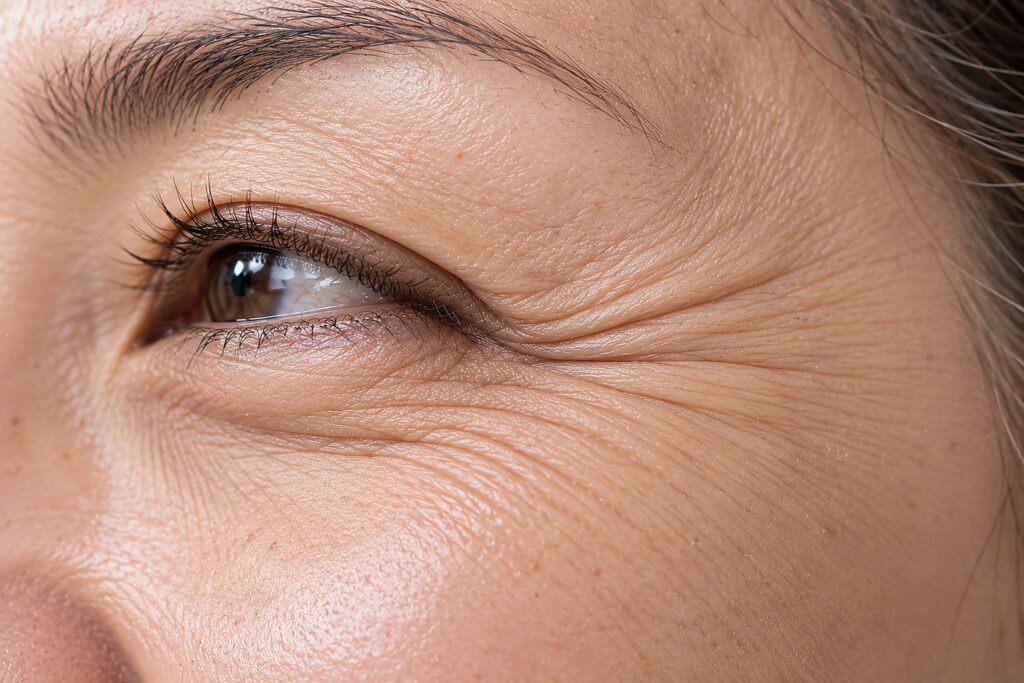
Crow’s feet are often one of the first signs of ageing people notice. They show up as fine lines fanning out from the outer corners of the eyes when you smile, and over time they can linger even when your face is relaxed. In Malaysia, where bright sunlight makes squinting a daily habit, many people start seeing them in their late 20s or early 30s.
Botox for crow’s feet is one of the most common and well-studied aesthetic treatments. This guide covers how it works, what results look like, how long they last and what to expect if you are also concerned about lines under the eyes.
What Are Crow’s Feet?
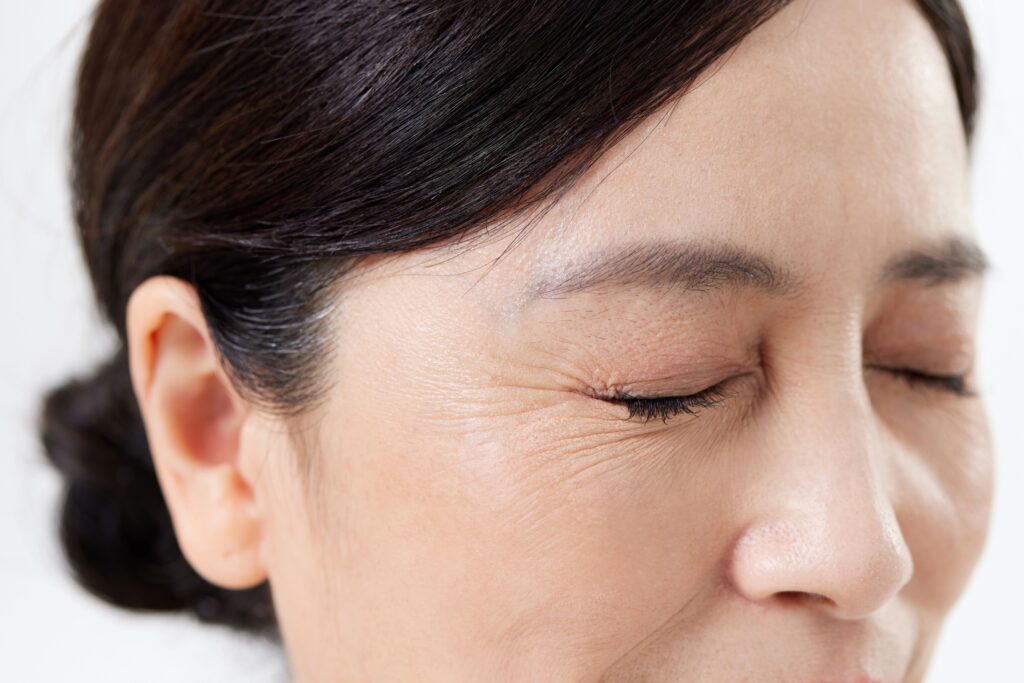
Crow’s feet are expression lines. They form where the skin folds every time the muscle around your eye, called the orbicularis oculi, contracts. This happens when you smile, laugh, squint or blink hard.
There are two stages:
- Dynamic crow’s feet: Visible only when you smile or squint. These respond best to Botox.
- Static crow’s feet: Still visible when your face is at rest. These have been etched into the skin over years and usually need Botox combined with treatments that improve skin quality.
What Causes Crow’s Feet and Eye Wrinkles?
Several local factors speed things up:
- Constant squinting: Strong sunlight and glare all year round means many people squint outdoors daily, often without sunglasses.
- High UV exposure: UV breaks down collagen and elastin, and the thin skin around the eyes shows this damage early.
- Outdoor lifestyles: Commuting on foot or by motorcycle, outdoor sports and outdoor work all add to sun exposure.
- Skipping sunscreen around the eyes: Many people avoid applying sunscreen close to the eyes because it stings, leaving this area unprotected.
| DOCTOR’S INSIGHT
“In my practice, patients who golf, run outdoors or work outside often have crow’s feet that are deeper on one side, usually the side that faces the sun when they drive. I ask them about sunglasses before I talk about Botox. If the squinting continues every day, the lines come back faster and the static part keeps deepening, no matter how well the injections are done.” Dr. Shilpa Suresh, Premier Clinic KL City, Bangsar & Mont Kiara |
How Does Botox Work Around the Eyes?
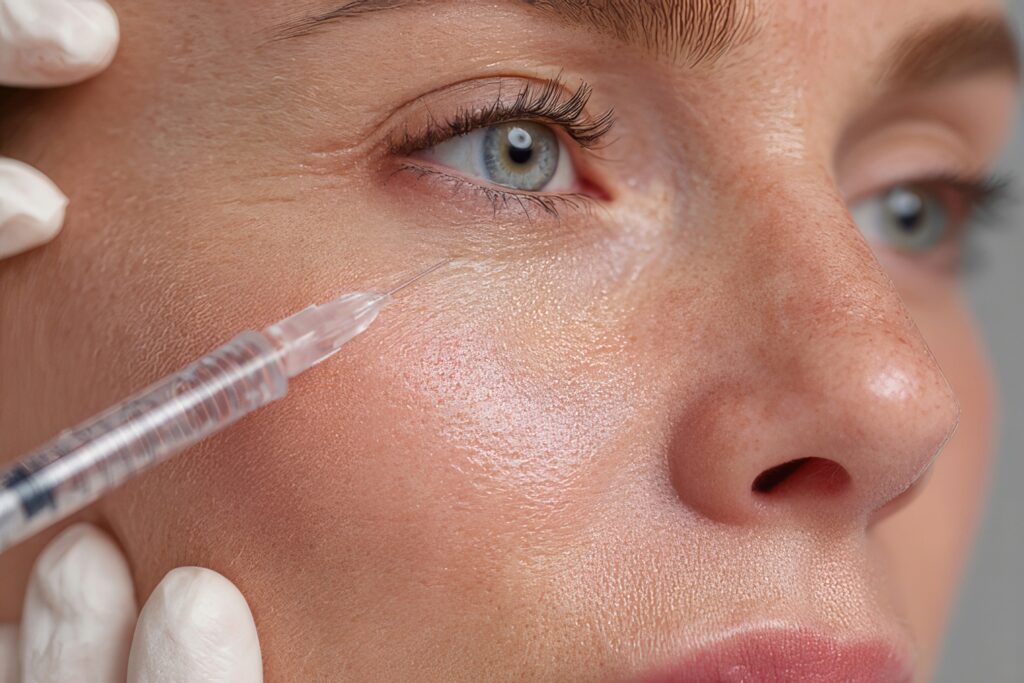
Botulinum toxin, widely known as Botox, temporarily reduces the signal from the nerve to the muscle. When small amounts are injected into the outer part of the muscle around the eye, that section contracts less strongly. The skin folds less when you smile, so the lines soften.
Botox has been used for crow’s feet for many years and is among the most studied cosmetic uses of the treatment. When done well, you can still smile naturally. The difference is that the creases at the outer corners are softer and shallower.
What to Expect During Crow’s Feet Botox Treatment
Consultation: Your doctor looks at your lines at rest and while smiling, checks your eyelids and brow position, and asks about your medical history and any previous treatments.
Preparation: The skin is cleansed. Numbing cream is rarely needed because the needles are very fine, but it can be offered.
Injection: Usually two to four small injections are placed on each side, staying well away from the eye itself. The procedure takes around 10 minutes.
After treatment: You can return to normal activities immediately. Avoid rubbing the area, lying flat for a few hours and strenuous exercise for the rest of the day.
Crow’s Feet Botox Results: How Long Does It Take to Work?
| Time After Treatment | What You May Notice |
|---|---|
| Day 1 to 2 | Small injection marks or a tiny bruise. No change yet. |
| Day 3 to 5 | Lines start to soften when smiling. |
| Around 2 weeks | Full effect. A good time for a review. |
| 3 to 4 months | Movement gradually returns. Lines begin to reappear. |
Crow’s feet treatments often wear off slightly sooner than Botox elsewhere on the face because the muscle around the eye moves so frequently. Regular treatments may help lines look softer for longer, as the skin has less repeated folding over time.
| OUR PATIENT’S EXPERIENCE
I supervise outdoor activities and squint in the sun most days, and my crow’s feet now stay even when I am not smiling. After Botox on both sides I had a tiny bruise for a few days. The lines softened within about a week and are less visible when I smile. By around four months they started to return, which is when I booked the next session. Mr S Kumar, 35 |
Crow’s Feet Before and After: Realistic Expectations
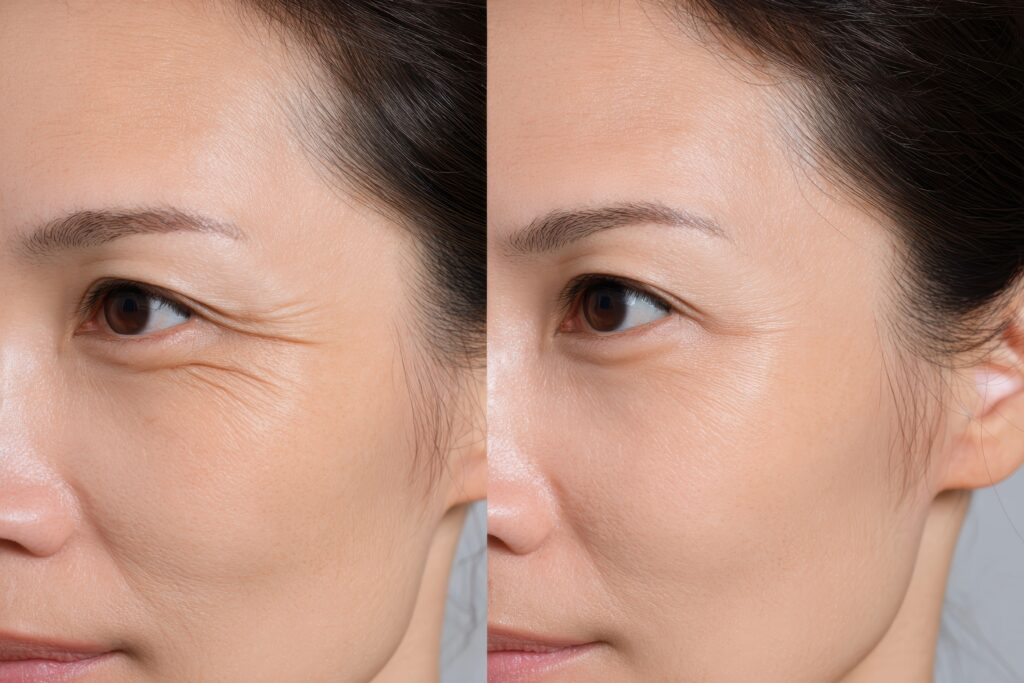
Searching for crow’s feet before and after photos can create unrealistic expectations, because lighting, angle and whether the person is smiling make a big difference. Here is what a realistic result usually looks like:
- When smiling: Lines are noticeably softer and shorter, but the smile still reaches the eyes.
- At rest: Fine static lines may look lighter. Deeper etched lines usually improve only partly.
- Overall: The eye area looks more rested. It should not look shiny, flat or frozen.
A good doctor will often take standardised photos at rest and while smiling before treatment, so you can compare fairly at your review.
| DOCTOR’S INSIGHT
“The lower injection points are where crow’s feet treatment can go wrong. If the product spreads into the muscles that lift the cheek, the smile can look slightly flat or uneven. I keep the lower injections above the cheekbone and photograph patients smiling broadly, not just at rest, so we can judge whether the smile still looks like theirs.” Dr. Foo Wing Jian, Premier Clinic Mont Kiara |
Can Botox Treat Under-Eye Wrinkles?
This is one of the most common questions, and the answer needs some care.
Botox for under eye wrinkles is used only in small amounts and only in selected patients. The muscle under the eye helps support the lower eyelid. Relaxing it too much can make under-eye bags look more prominent, cause puffiness or, rarely, affect how the eyelid sits against the eye.
Under-eye lines also have different causes from crow’s feet:
- Thin, crepey skin: Caused by collagen loss and sun damage rather than muscle movement
- Volume loss: A hollow tear trough casting shadows and making lines look deeper
- Dryness: Dehydrated skin shows fine lines more easily
For many patients, treatments that improve skin quality, such as skin boosters, Rejuran or carefully chosen lasers, are better suited to under-eye lines than Botox.
| OUR PATIENT’S EXPERIENCE
My main concern is fine, crinkly lines under my eyes rather than crow’s feet. Because I already had some puffiness, I was told Botox under the eyes was not advised. I had Botox for the crow’s feet only, with a course of skin boosters for the under-eye area. The crow’s feet softened within a week, while the under-eye skin improved more gradually. After the second booster session it looked less crepey in daylight. Madam Jolene G, 42 |
Possible Side Effects Of Botox For Crows Feet
Botox around the eyes is generally safe when done by a trained doctor. Possible side effects include:
- Small bruises, more common around the eyes because the skin is thin
- Mild swelling or tenderness at injection points
- Headache for a day or two
- A slightly uneven smile or cheek movement if the product spreads, which is temporary
- Dry eyes or under-eye puffiness in rare cases
| DOCTOR’S INSIGHT
“For patients with darker skin tones, Botox is often a sensible first step for crow’s feet, because it does not carry the risk of pigmentation that some lasers and peels do in Indian and Malay skin. Where the lines are already etched and crepey, I add skin quality treatments, but I choose settings and products with that pigmentation risk in mind.” Dr. Deeban Ramasamy, Premier Clinic KL City, TTDI & Puchong |
Combining Botox With Other Treatments
Crow’s feet often respond best to a combination approach:
- Botox: Softens the lines caused by movement
- Skin boosters or Rejuran: Improve hydration, thickness and texture of the skin around the eyes
- Lasers such as fractional CO2 laser: Can help resurface etched lines, with careful settings for darker skin
- Sun protection: Daily sunscreen and good sunglasses slow the return of lines
There are many myths about Botox, such as the idea that it always leaves the face frozen or that wrinkles get worse when you stop. Neither is true when it is used appropriately.
Final Thoughts: Is Botox Effective for Crow’s Feet?
Botox for crow’s feet is a quick, well-established treatment that softens smile lines around the eyes with minimal downtime. The best results keep your smile warm and expressive while reducing the creases that make you look tired. For lines under the eyes, an honest assessment matters, because Botox is not always the right tool.
If crow’s feet are bothering you, the doctors at Premier Clinic can assess your eye area and recommend whether Botox, skin treatments or a combination will suit you best.
Frequently Asked Questions
How long does crow’s feet Botox last?
Usually 3 to 4 months. The muscle around the eyes moves frequently, so results can wear off slightly faster here than in other areas. Many patients schedule treatments three or four times a year.
Will Botox around the eyes make me look frozen?
Not when done conservatively. The goal is to soften lines while keeping a natural smile. A frozen look usually comes from using too much product or treating too wide an area.
Can Botox fix wrinkles under the eyes?
Only in selected patients and in small amounts. Under-eye lines are often caused by thin skin or volume loss rather than muscle movement, so skin boosters, lasers or tear trough treatments are often more suitable.
When will I see my crow’s feet before and after difference?
Lines usually start to soften within 3 to 5 days, with the full effect at around 2 weeks. Comparing photos taken at rest and while smiling, in the same lighting, gives the fairest picture.
What happens if I stop getting Botox for crow’s feet?
The muscle gradually returns to normal movement and the lines return to how they would have been. They do not become worse than before because you had Botox.